
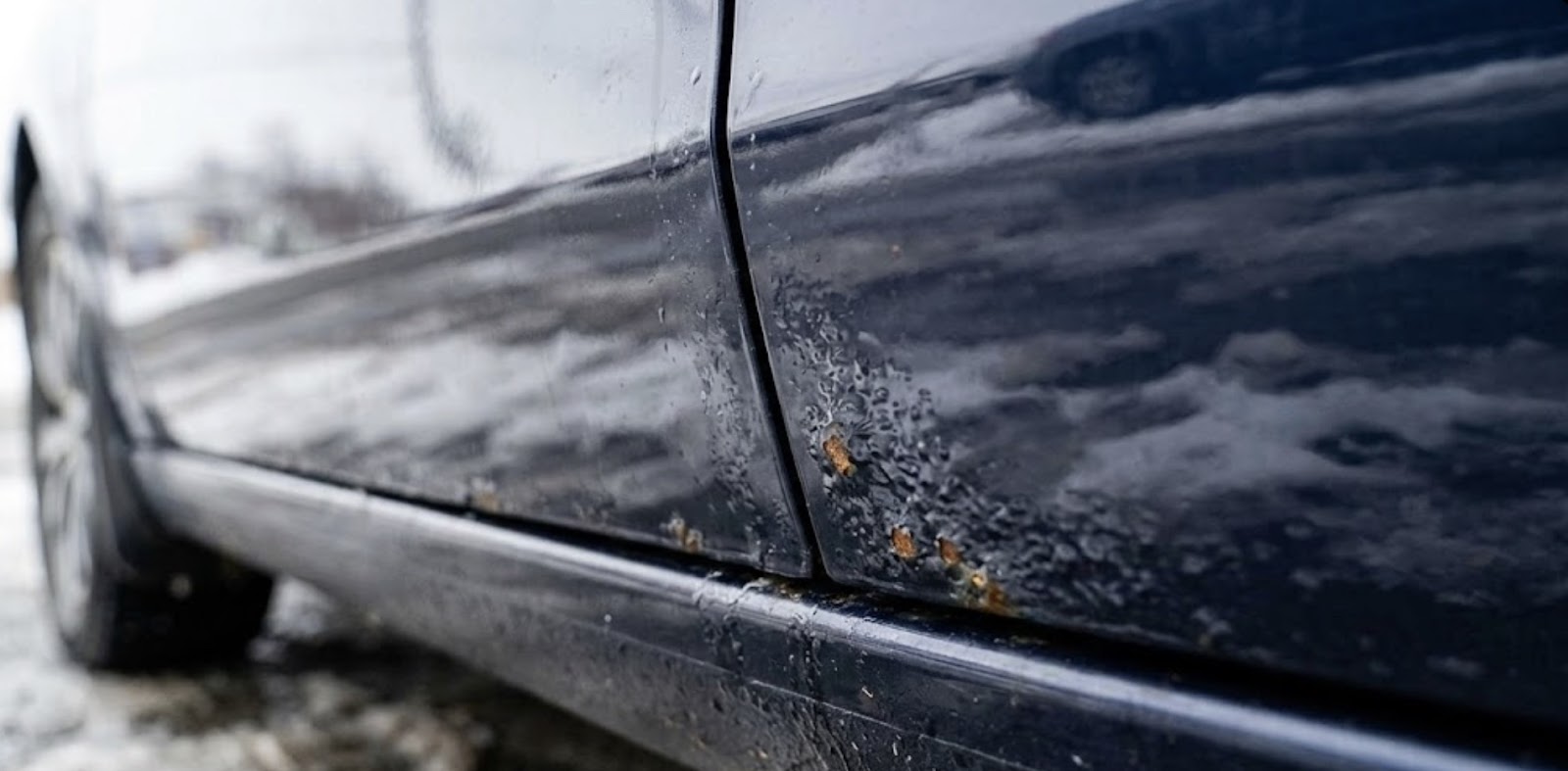
Winter in Atlantic Canada is tough on vehicles. Snow, slush, salt, and constant temperature changes don’t just make driving harder; they also create the perfect conditions for rust to form.
The problem is that rust rarely starts where you can easily see it. It builds slowly underneath vehicles, and in places you don’t check every day. By the time it becomes obvious, repairs can be more expensive than expected. The good news is that rust is manageable when you understand how it forms and act early. This guide explains how winter rust develops, where it hides, how to prevent it, and when it becomes more than just a cosmetic issue.
Why Winter Causes Rust to Spread Faster
Rust forms when metal reacts with moisture and oxygen. Add road salt to the mix, and that reaction speeds up. Winter conditions don’t just introduce moisture; they keep it sitting on your vehicle for long periods of time.
Winter creates the perfect environment for rust because:
- Road salt sticks to exposed metal surfaces and accelerates corrosion
- Slush and snow trap moisture against the body of your vehicle
- Freeze–thaw cycles expand tiny cracks in paint and protective coatings
- Vehicles are washed less often in colder months
When salt and moisture remain on metal, corrosion has time to take hold. Interrupting that process early makes a noticeable difference.
Where Rust Usually Starts on Your Vehicle
Rust rarely begins in the middle of a door or hood. It typically forms in areas where moisture collects or protective coatings wear down over time.
Wheel Wells and Fender Edges
Your tires constantly throw slush, salt, and debris into the wheel wells. Over time, this chips away at paint and protective coatings. Once bare metal is exposed, rust can start forming quickly.
Rocker Panels and Door Bottoms
The lower sections of your vehicle are regularly exposed to road spray. Drainage holes can clog with dirt or debris, allowing water to sit longer than it should, which increases the risk of corrosion.
Undercarriage and Frame Components
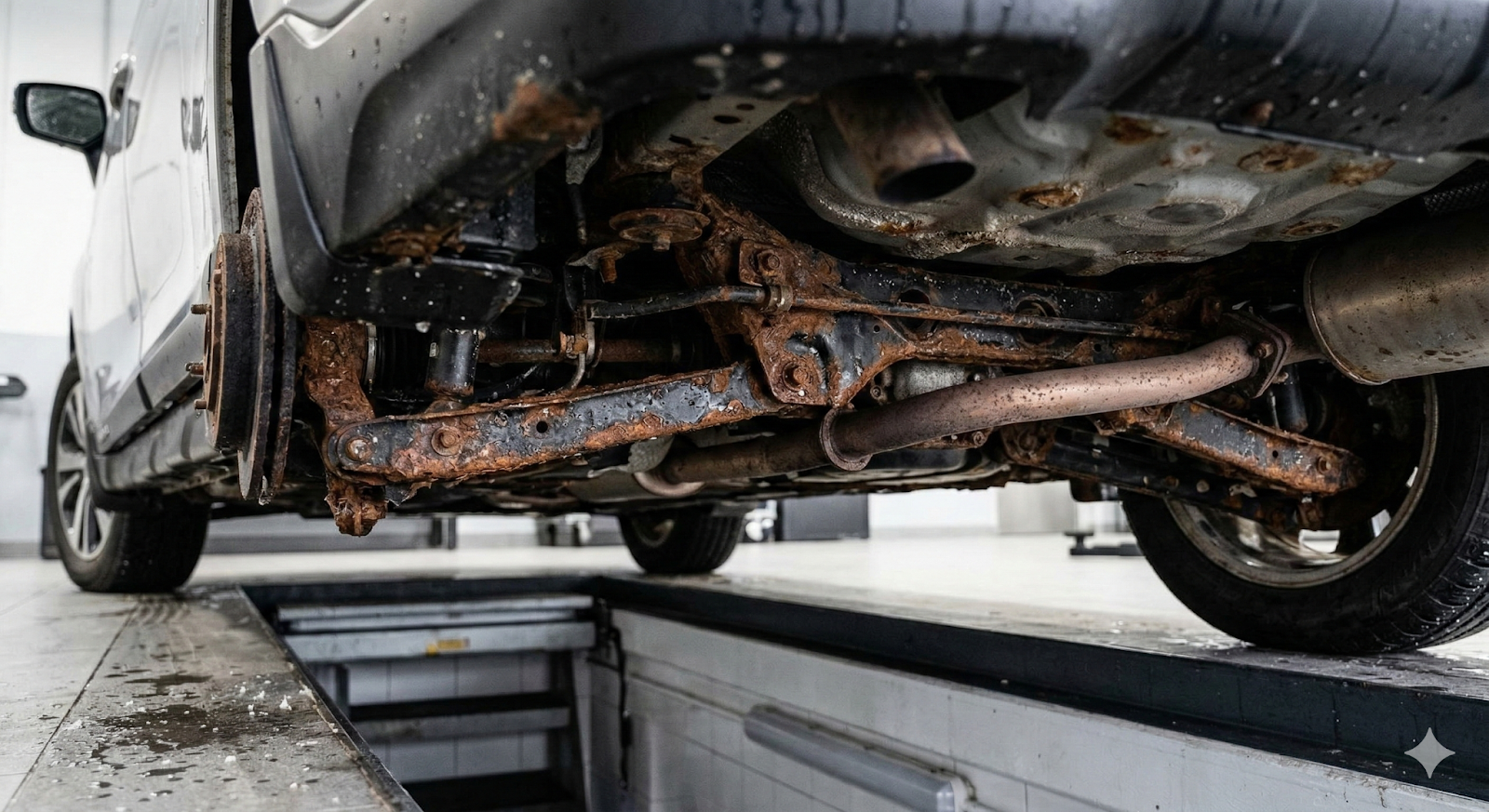
The underside of your vehicle is in direct contact with salt and moisture every time you drive. Because it’s out of sight, rust underneath often goes unnoticed until it becomes more serious.
Trunk and Tailgate Seams
Moisture can collect along seams and weather stripping. If paint becomes damaged in these areas, rust may begin along the edges and gradually spread.
Knowing where rust typically starts makes it easier to catch early warning signs.
Early Warning Signs of Rust Damage
Catching rust early can prevent larger repairs later. Surface rust is often manageable if addressed quickly.
Watch for signs such as:
- Bubbling or blistering paint
- Small orange or brown stains on metal
- Flaking or rough texture along edges
- Soft spots near seams or lower panels
- Visible corrosion underneath the vehicle
If you notice any of these signs, it’s worth having your vehicle looked at. Early treatment is much simpler than repairing widespread corrosion.
When Rust Becomes a Safety Concern
Not all rust is equal. Surface rust may affect appearance, but deeper corrosion can impact safety. When rust spreads to structural components, it can weaken important parts of your vehicle.
Brake lines, suspension mounts, and frame sections are especially important. If corrosion affects these areas, it may compromise stability or braking performance.
The longer rust is left untreated, the more it spreads beneath the surface. Addressing concerns early helps avoid both safety risks and rising repair costs.
How to Prevent Winter Rust Before It Spreads
Preventing rust is usually far more affordable than fixing it. A few simple habits can make a meaningful difference during winter.
1. Wash Your Vehicle Regularly
Even in colder weather, regular washing helps remove salt buildup. Pay special attention to lower panels and wheel wells where residue collects most heavily.
2. Pay Attention to the Undercarriage
Many car washes offer underbody rinses. These help remove salt and moisture from areas you can’t easily see, but that are highly exposed.
3. Repair Paint Chips Quickly
Small paint chips may not seem urgent, but they expose bare metal. Touching up damaged areas restores protection and reduces the risk of rust forming.
4. Consider Protective Undercoating
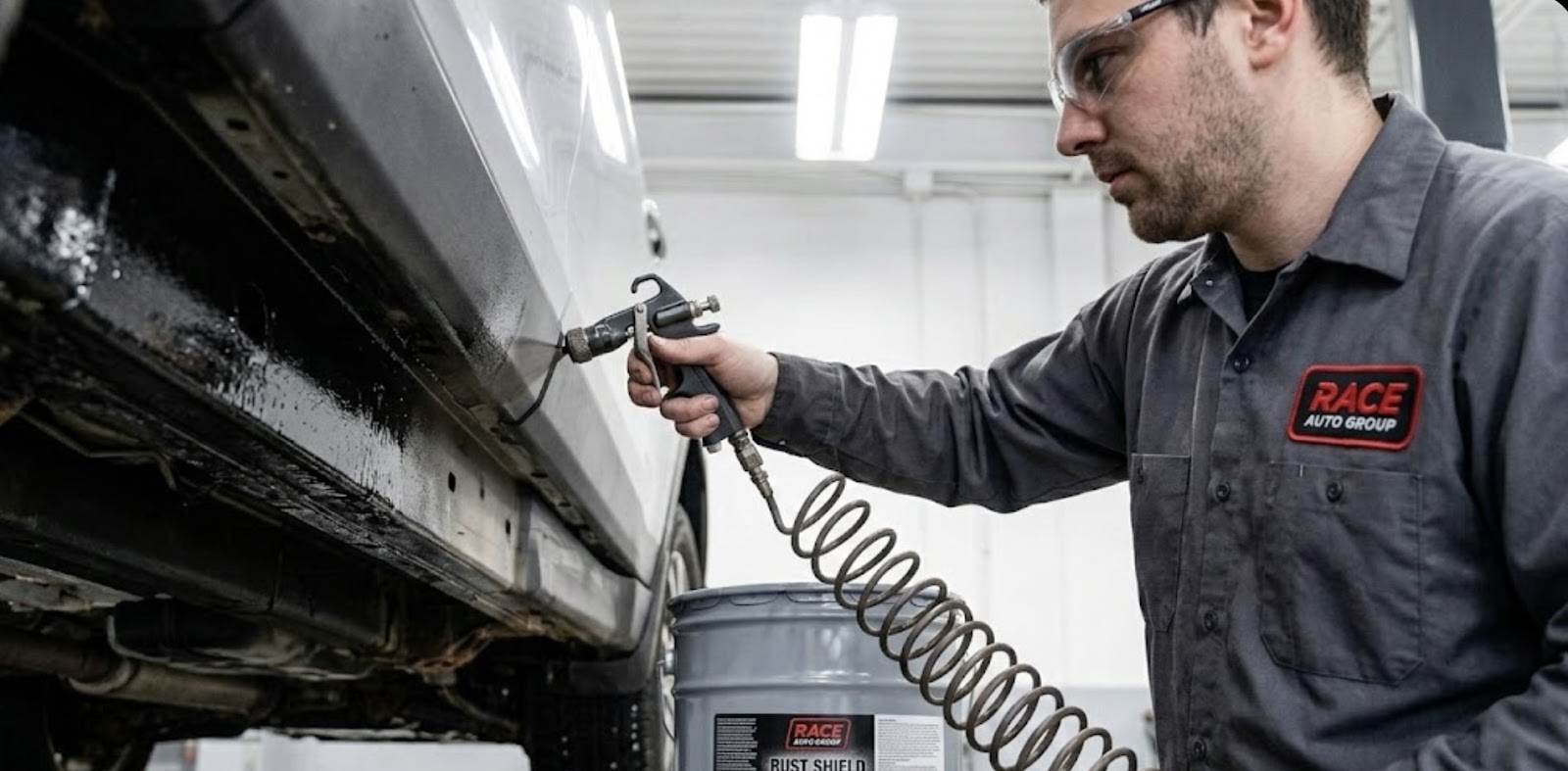
Protective coatings create an added barrier between metal and winter elements. While not permanent, they can slow corrosion significantly in high-exposure areas.
These steps don’t take much time, but they help protect your vehicle’s value and long-term reliability.
How Race Auto Group Helps Protect Your Vehicle from Winter Rust
At Race Auto Group, we know how demanding Atlantic Canada winters can be on vehicles. Our team can inspect your vehicle for early signs of corrosion and help you understand what’s happening before it becomes a larger issue.
If preventative maintenance or repairs are recommended, we’ll walk you through your options so you can make a confident, informed decision without feeling pressured. Protecting your vehicle’s safety and long-term value is always our priority.
Winter-Ready Vehicles You Can Rely On
If you’re considering upgrading, our inventory includes thoroughly inspected used vehicles prepared for real-world winter driving conditions. Confidence on icy roads starts with a vehicle you trust.
Take Action Before Rust Spreads Further
Rust doesn’t fix itself. What begins as a small patch can quietly expand if left untreated. Addressing it early helps prevent more extensive repairs later.
If you’ve noticed signs of corrosion or simply want peace of mind this winter, consider booking an inspection. Taking action now helps protect your vehicle’s safety, appearance, and long-term performance.
FAQs
1. How quickly can winter rust start forming on a vehicle?
Rust can begin forming sooner than many drivers expect, especially when salt and moisture remain on exposed metal for extended periods. While it may take time to become visible, the corrosion process can start within weeks during heavy winter conditions.
2. Does rust spread even if I park in a garage?
Parking in a garage helps reduce exposure to snow and ice, but it doesn’t completely eliminate the risk. If salt and moisture are already on the vehicle, they can continue reacting with metal surfaces even indoors. Regular washing is still important.
3. Is surface rust something I can fix myself?
Minor surface rust can sometimes be treated with sanding and touch-up paint. But if the rust has spread beneath the surface, professional inspection is recommended to prevent further damage.
4. Can rust cause my vehicle to fail a safety inspection?
Yes, if corrosion affects structural components such as the frame, suspension mounting points, or brake lines, it can impact safety and inspection results. Cosmetic rust alone is usually not a reason for failure, but structural damage can be.
